📖 8 minutes
Author: Dana Olarescu
Originally published: May 2024, ACV1 Growth
Photography: Amanda Fordyce & Connor Rankin
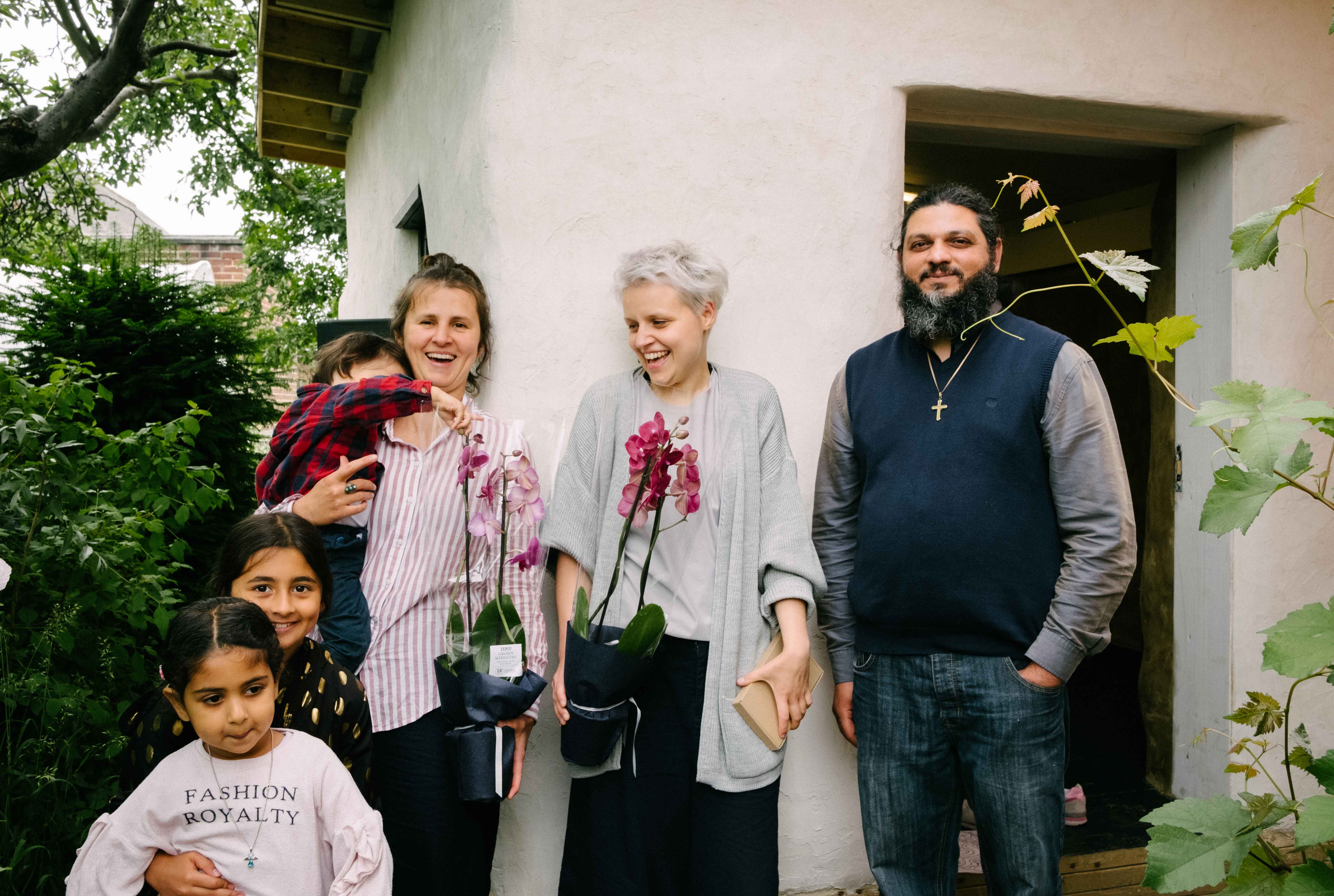
July 2020. We’re in lockdown. The sun is scorching and I’m travelling by tube for the first time since March, accompanied by feelings of excitement and apprehension. I’m on my way to May Project Gardens where together with social designer Paulina Sidhom and carpenter David Murray, I’ve been commissioned to design and construct a low-impact outdoor classroom.
Today I’m on my own, about to take down an existing shed to make space for our construction with the help of four young people. Am I endangering their health? Should they be helping with this grimy task at all? These unsettling thoughts are punctuated by the incessant usage of my hand sanitiser.
On site, I meet my accomplices: a group of 18-year-old refugees and asylum seekers from Eritrea and Ethiopia. They welcome me and conduct a tour of the site as I hadn’t visited since the first lockdown and collectively dismiss my safety concerns.Their lived experiences – including perilous journeys to the UK along with the day-to-day struggles they face in London – have turned them into resilient young men. By comparison, Covid-19 doesn’t rank highly on their list of concerns. As the responsible adult in charge, I am skeptical and still deploy masks, social distancing guidelines and a risk register. We begin to work; and throughout the day, I start to understand their viewpoints.
What do communities and natural buildings have in common?
May Project Gardens came to life straight from the Morden-based council house of founder Ian Solomon-Kawall, who was a carer for his mother. After her passing, he opened the site to local communities so that they could also benefit from the healing power of nature which he relied on during a time of immense personal pain. Fifteen years later, local people’s personal, social and economic transformation was made possible due to this biophilic reconnection.
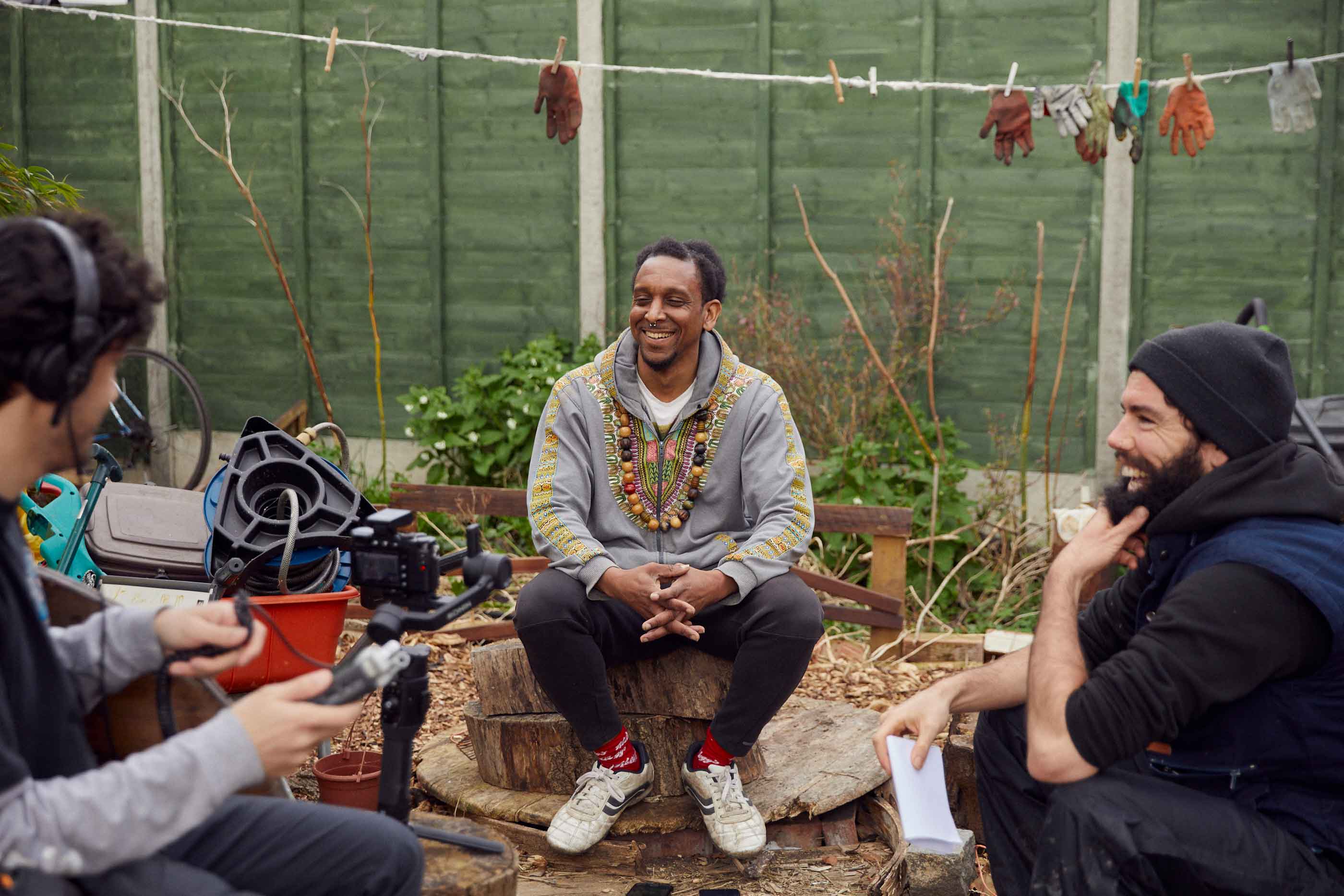
This award-winning grassroots organisation makes environmentalism attainable and affordable for those marginalised from mainstream environmental movements due to race, income, exposure, or confidence. By prioritising permaculture principles of both land-and people-care, the gardens have become a second home to numerous underserved groups, including young people, people of colour, refugees and asylum seekers, whose access to green space has always been unequal.
Increased demand for the site led founder Ian Solomon-Kawall to plan an extra space: an outdoor classroom where sessions could be run year-round. Having previously focused on democratising organic food-growing principles and holistic healing through community resilience, May Project Gardens is now also addressing another issue: sick building syndrome¹. With a high number of visitors trapped in overcrowded accommodation with unsuitable conditions and interested in alternative solutions, this seems like a natural next step.
The intersection of these complexities has turned this commission into something more meaningful than designing and building a new structure. Instead, we began by devising possible scenarios and were galvanised by the possibility of addressing multiple challenges, such as:
The use of processes that respect the site which is set up as permaculture place, ensuring we preserve wildlife
The use of straightforward, easily-understood design principles, so that construction could involve the wider community, irrespective of previous experience
Finding ways for community intellectuals’ input to permeate the design
Proving that – similarly to growing organic food – natural building can be possible and affordable, even within the constraints of a council-owned site
The commission began with an interrogation of sustainable, low-impact building principles, which address the ethics of construction – from growing, manufacturing and handling, to the cradle-to-grave cycle of the materials involved. We were mentored by the inimitable Barbara Jones, of architectural practice Straw Works, UK pioneer of straw-bale building and passionate advocate for natural building. In addition to finding solutions for building ecological houses with local materials, Jones has spent the last few decades empowering other women to develop these skills, combating the pervasive misogyny of the construction world.
Our build uses some of Straw Works’ core principles:
Use of gravel and recycled foam glass²-filled railway sleepers to replace cement (the second most used resource in the world after water, which causes five percent of Anthropogenic CO² emissions)
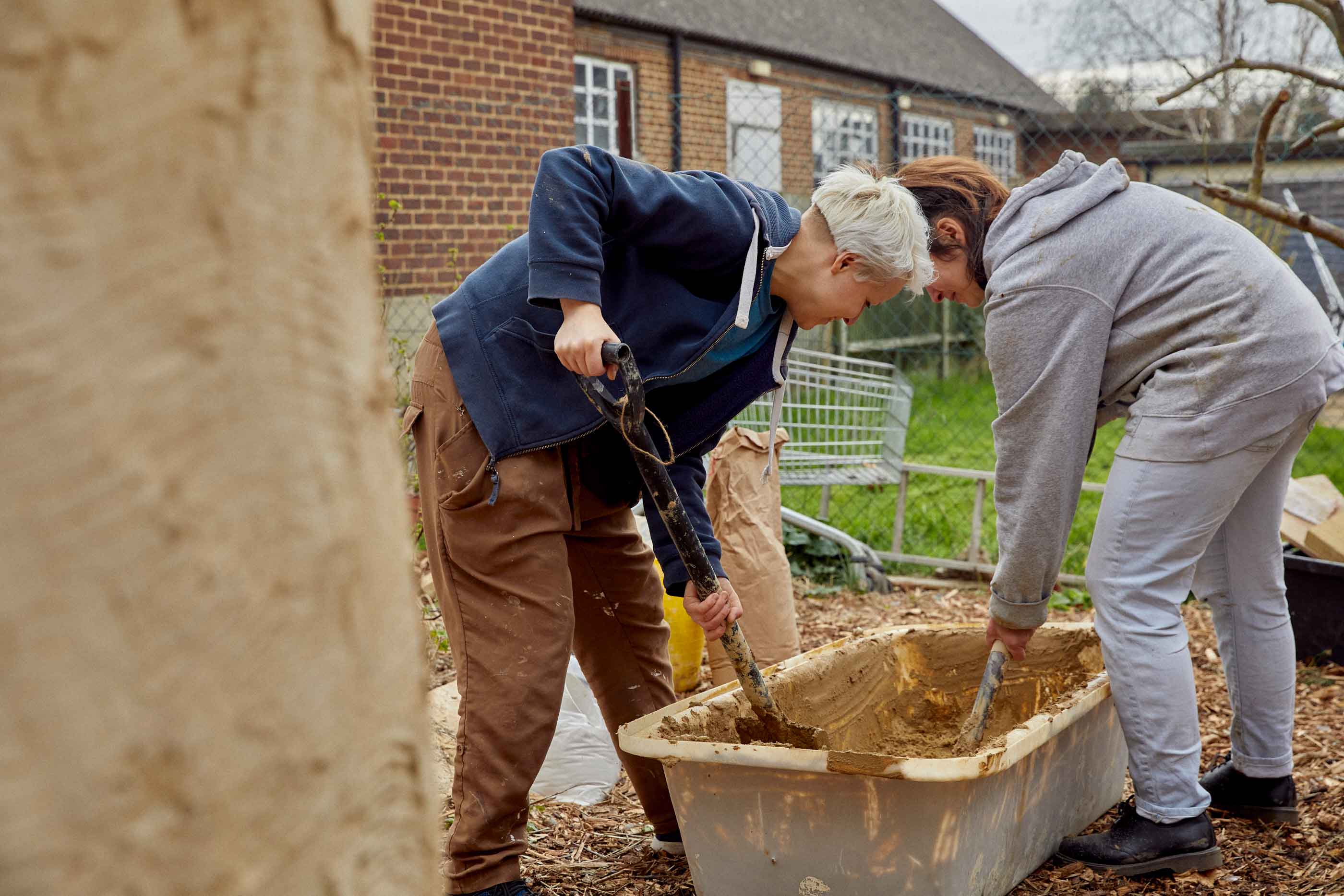
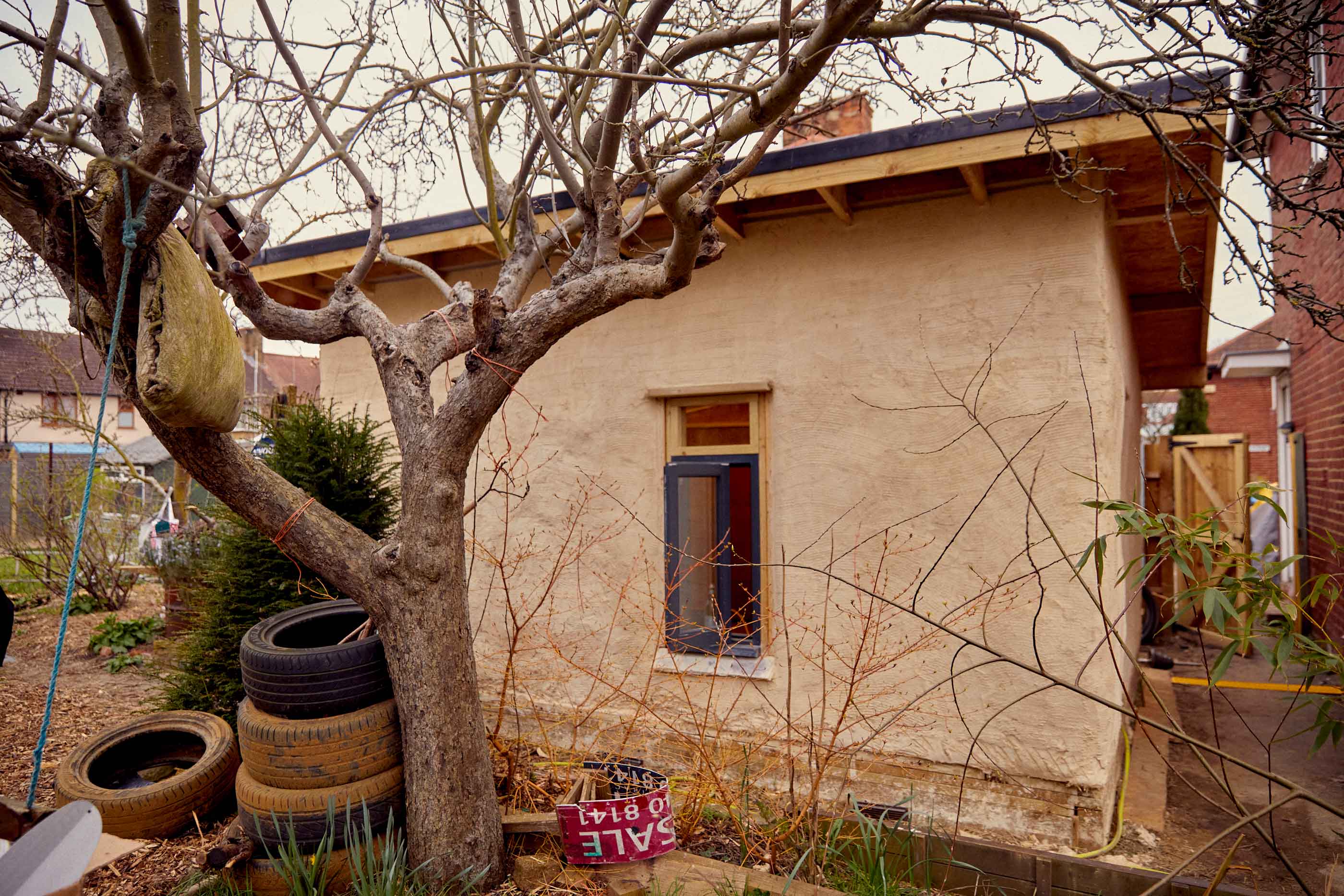
Building with waste materials, such as the construction of our load bearing walls from excess straw, which would otherwise be burnt after harvesting
Substitution of regular plaster outside with a breathable lime render, which absorbs and releases moisture (therefore protecting adjacent materials) and is more eco-friendly (the lime manufacturing process produces less carbon dioxide than ordinary cement), as well as being flexible, anti-fungal, and exceptionally durable
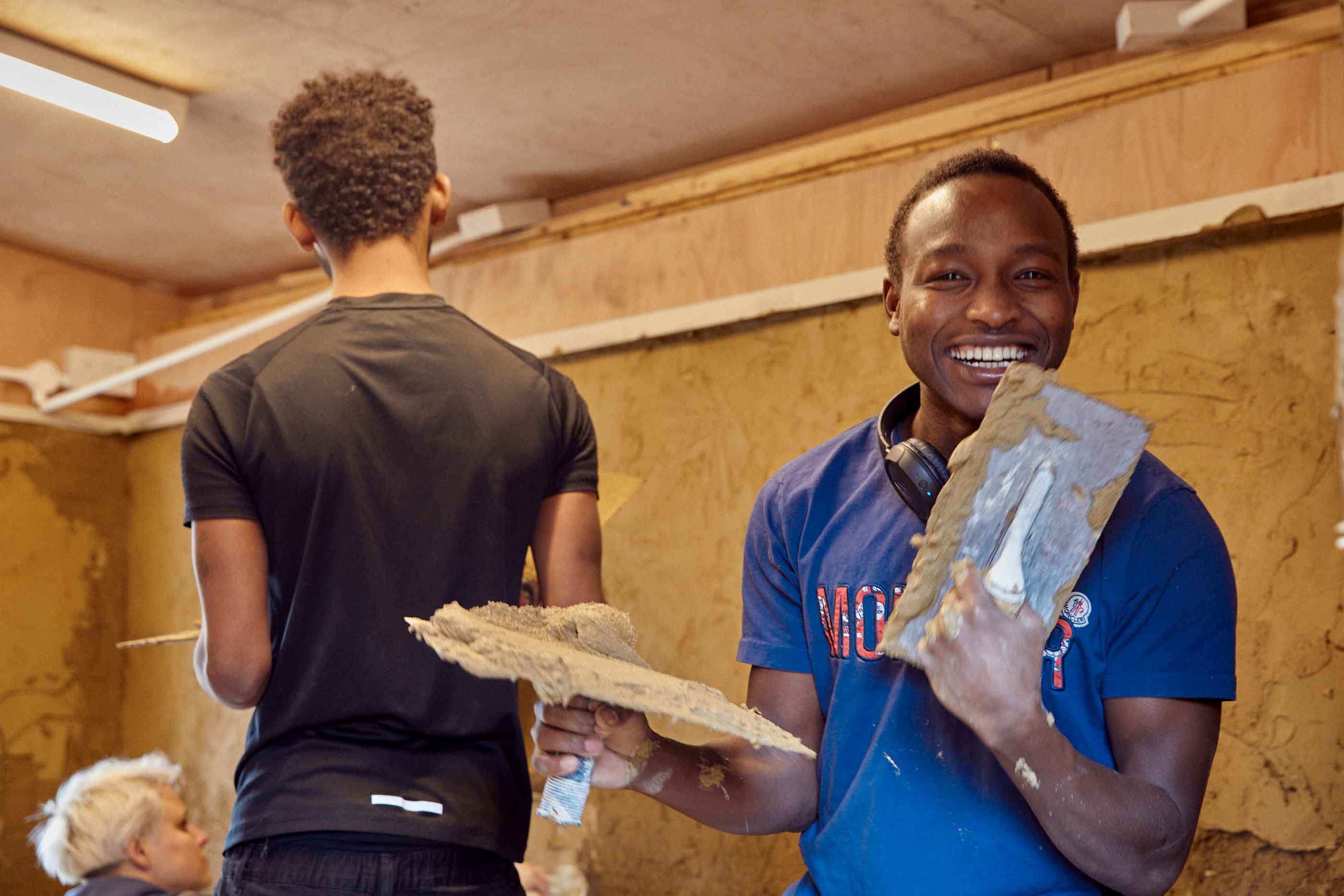
Use of clay plaster inside, which absorbs atmospheric humidity, dries naturally (unlike gypsum, which sets chemically) and is fully biodegradable. It can be wetted for removal from the wall, allowing reapplication in the case of an unsatisfactory finish – meaning that it produces no waste.
Year-round rainwater harvesting enabled by the installation of a mono pitch roof – saving over 150,000 litres saved per year for watering the garden
What makes community?
The straw-bale classroom is intended to be an alternative education space where young people of colour can access a more holistic curriculum than the national model. It has been envisioned as equal parts school and safe space, ensuring that the history, legacy and purpose of the site will be honoured.
The four young people I kicked off the project with are part of the wider Hip-Hop Garden program pioneered by Ian Solomon-Kawall, which fuses music production with nature. Working with them and the extended group over the summer months allowed us to make necessary adjustments to the design, embed their views and experiences into the final form and become attuned to their specific needs for the space.
Given the frequency with which they are stopped and searched by the police (one young person having been accosted ten times in a single day by the same officer), we also wanted to ensure a sense of physical safety. Often presented as a monolithic community that is spoken for rather than listened to, young refugees’ specific needs are seldom addressed: these include precarious housing, acute loneliness, barriers to work and education due to legal status, deep traumas, racism and systemic violence. The British education system makes no effort to cater to their arrival, providing only basic English language and Maths courses, which they have already mastered. In recognising these gaps – including a curriculum that omits the history of colonialism – the Hip-Hop Garden program will continue to engage its participants with subjects they are interested in and passionate about, address the root cause of the above challenges and prepare them for meaningful employment.
These specific individuals have been coming to the garden for over two years to learn about permaculture principles and make music about nature. Through this, they have met other regular visitors from groups they wouldn’t otherwise have the opportunity to interact with, including trans people, single mothers, immigrant womxn and people of colour who face similar exclusion. While working on the build, May Project Gardens’ staff also ensured they received relevant qualifications through partnership with Volunteer It Yourself, a community interest company helping teenagers gain skills in the construction industry.
The young people’s commitment gained them City & Guilds qualifications in Health and Safety, Carpentry, Painting and Decorating; furthering their employment prospects.
When grief and joy collide
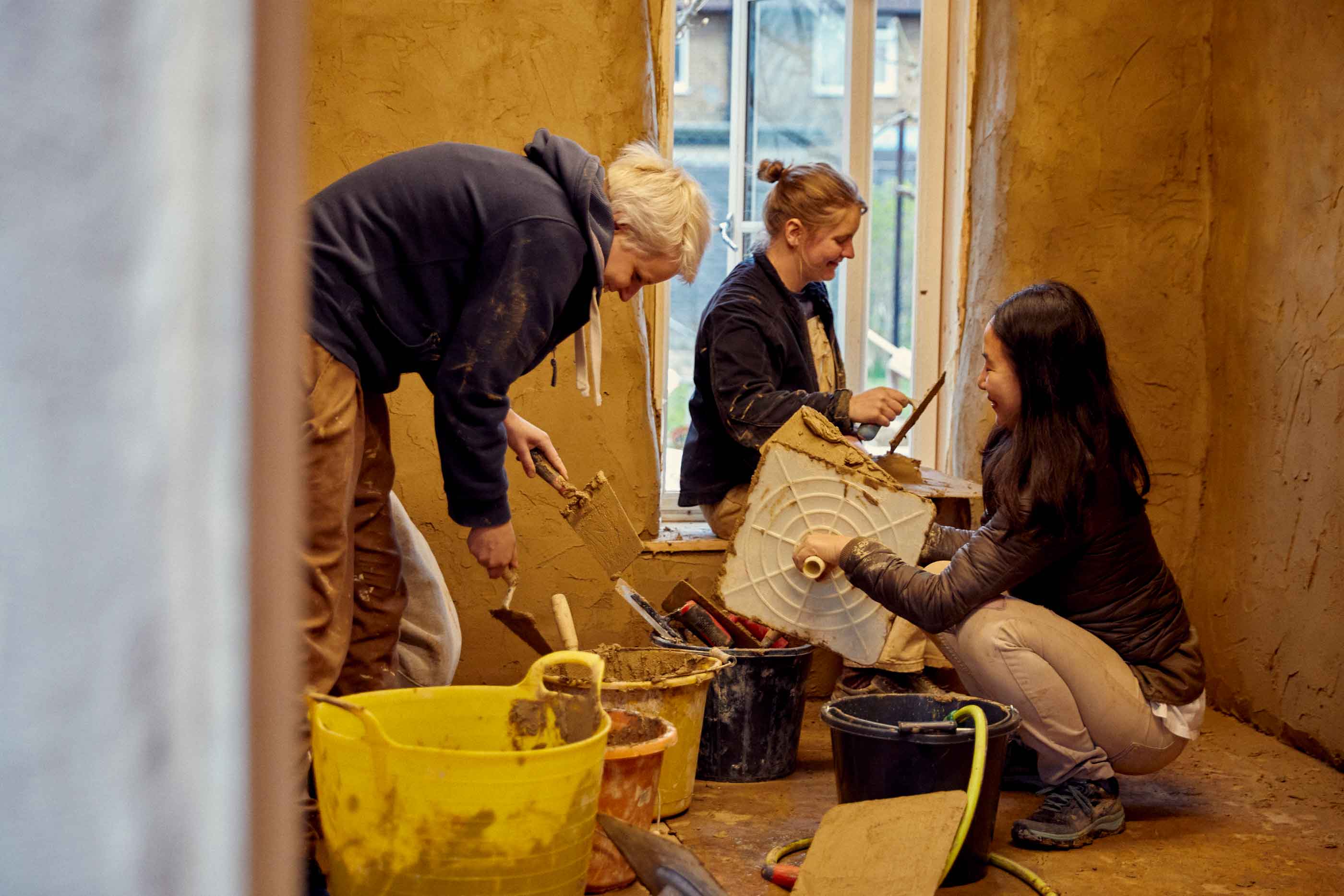
During construction, stories were shared that often led to conversation around cultural habits and differences. Around 45 volunteers also joined us at various times, meaning that training was ongoing and at times intensive; nevertheless, the young people stayed engaged, encouraging everyone to continue even on rainy or desolate afternoons. Isolation during the pandemic meant that the opportunity to be outdoors in the company of their peers far surpassed fear of the virus.
Their desire to be alive deafened sorrow and grief. The mundane question, “How are you?” was perpetually answered with a clear, “I am alive!”, delivered with an incandescent smile.
Though the young people’s arrival in the UK flowed from war, violence and destabilisation, we avoided viewing the classroom as a method of putting down roots in this country. Instead, we contemplated being at peace with letting go, coming to terms with temporary settlement and sharing fleeting moments with others. What we built will never replace their homes but became a symbol of togetherness regardless.
While homes represent stability, this work site became an emblem of rootlessness. Far from being a clear-cut ending, the UK is only one part of this narrative: migration stories do not begin or end with borders but extend to the sale of weapons, the dropping of bombs, families perishing and the devaluation of black bodies.
Above all, I was taught the striking power of joy, of relishing the present moment and of the resilience earnt through the survival of violence, death and trauma. One anecdote made a powerful impression: a local resident of Afghani origin, who grew up around similar buildings, said, “Buildings around here make you feel like a robot, but when I see this one, I can find myself and be reminded of who I really am.” The purposeful replication of familiar structures, or even specific elements, creates environments that lend themselves to healing – something we plan to advocate for in the construction industry once the building opens officially to the public.
Even liaising with natural material suppliers demonstrated to us the strength in connectivity. Hazel rods (used to secure the straw-bale walls) were supplied by Wrongs Covert, a woodland restoration project 12 miles north-west of Norwich, that provides opportunities for young people not currently in mainstream education. Conversation led to further collaboration and plans to take the cohort on a nature weekend next summer.
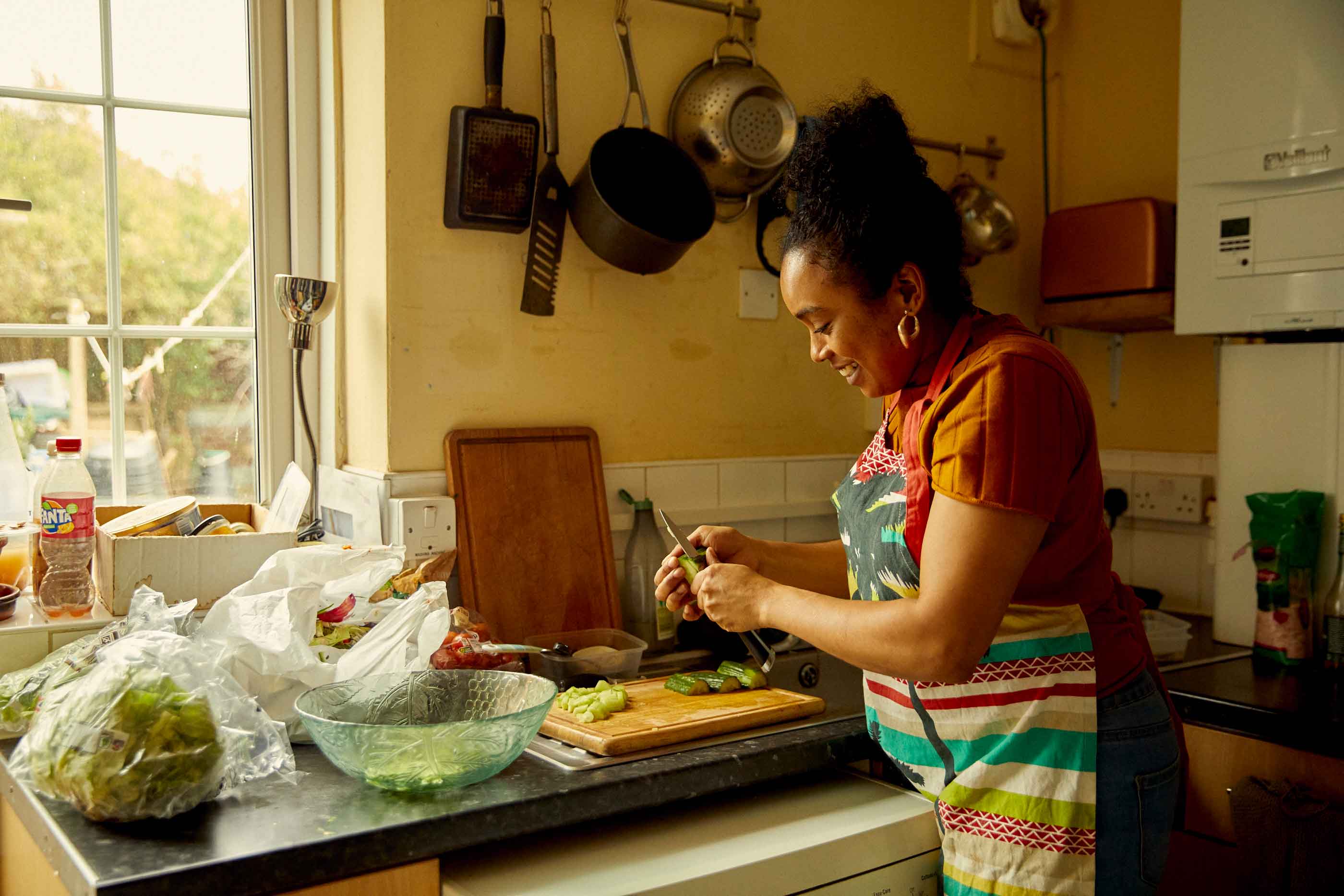
Various materials and tools were donated or borrowed by neighbours eager to help. Once our faces became familiar, even shop assistants in hardware stores asked about our project – in one case, before revealing that they had worked with children in refugee camps and were interested in visiting the site. Numerous people helped plaster the building, with their hands and care becoming imprinted in its fabric.
At May Project Gardens, people come and go; whether for a seed swap, to cook with leftovers, chat, reconnect with nature, rest in the garden, or to help; the place brims with life. Recent focus on local resilience has given the term a slightly romantic connotation, when the reality is that due to systemic injustices that underserved communities face, they have no other choice than to become resilient. When everyday local knowledge is listened to, residents feel heard, involved and gain a sense of ownership which generates community-wide benefits.
Long before the COVID-19 pandemic, May Project Gardens had modelled a grassroots approach to their methodology: they worked from the holistic viewpoint of restoring their visitors’ dignity. Fifteen years later, those who enter the space do so with power and willingness to give back and to serve others. The young people are now at that point, and soon, I hope to see them owning their resilience and inspiring others with their stories. No capitalist market could buy this community’s currency: value and care, cultivated through trust.
July 2020. The shed has been taken down, but we are facing a minor challenge: a grapevine was using it as a trellis and now unsupported, has fallen to the ground. It’s late, and I’m ready to give up, but the young people remain determined to find a solution to prevent it from perishing. The group improvise by finding old furniture in the garden to construct a temporary structure. Suddenly, I am pushed out of the way of a falling bookcase. Trying to understand what happened, I turn around and am casually told that the young person who pushed me saved my life. The matter-of-factness and the ease with which they continue to work, stuns me. I stand in silence for a moment; it’s hot, we’re tired and I’m at a loss for words. They’ve come so far that survival has become their second nature.
Dana Olărescu is a socially engaged artist working at the intersection of performance, installation and social design, with a focus on challenging minority exclusion and environmental injustice. Through participatory methodologies that democratise access to art and knowledge, she is interested in involving migrant individuals and groups as active co-producers of culture.
@dana_olarescu


Be the first to know our news.
No spam, ever. We promise.
2026 © Studio ACV
ACV is a registered C.I.C / Community Interest Company no. 15516492
For general enquiries:
info@acvmag.com